
Day 7 continued…
My favorite part about our honeymoon (besides the fact that I was traveling in a new country/continent with my new husband) was how much we could explore. I loved that even though we spent the entire time in the Western Cape (only one of the nine provinces in South Africa), we made the most out of it, venturing to the Indian and Atlantic Oceans, national parks, major cities, wine region, and the African bush! I mean, we even fit a road trip and flight in, which leads me to the next stop of our honeymoon–Johannesburg!
The flight from Cape Town was a short two hours, where we watched the sun go down over some incredible landscape. Since we arrived later in the evening, we planned on having dinner and heading to bed early. Unfortunately, that didn’t quite happen. A family friend of ours who has been to South Africa numerous times had local guides they wanted to pair us with, so we ended up grabbing dinner with them.
We stayed at the African Pride Melrose Arch, which was located inside what I would describe as a gated community, but instead of houses, there were restaurants, shops, hotels, and apartments..ya know, with some barbed wire on top of the gates. Though it was something I’d never seen before, it was nice because it was safe. While Jo’burg, in general, is safe for travel, we were still cautious throughout our time because the crime rate is high. Carjacking and theft are prevalent, so we tried our best to be aware of our surroundings, what we were doing, and what we were showing. We avoided wearing anything too flashy, and I usually didn’t wear jewelry. On our honeymoon, I didn’t wear my wedding band or engagement ring, again, to be cautious. Anywho!
Day 8


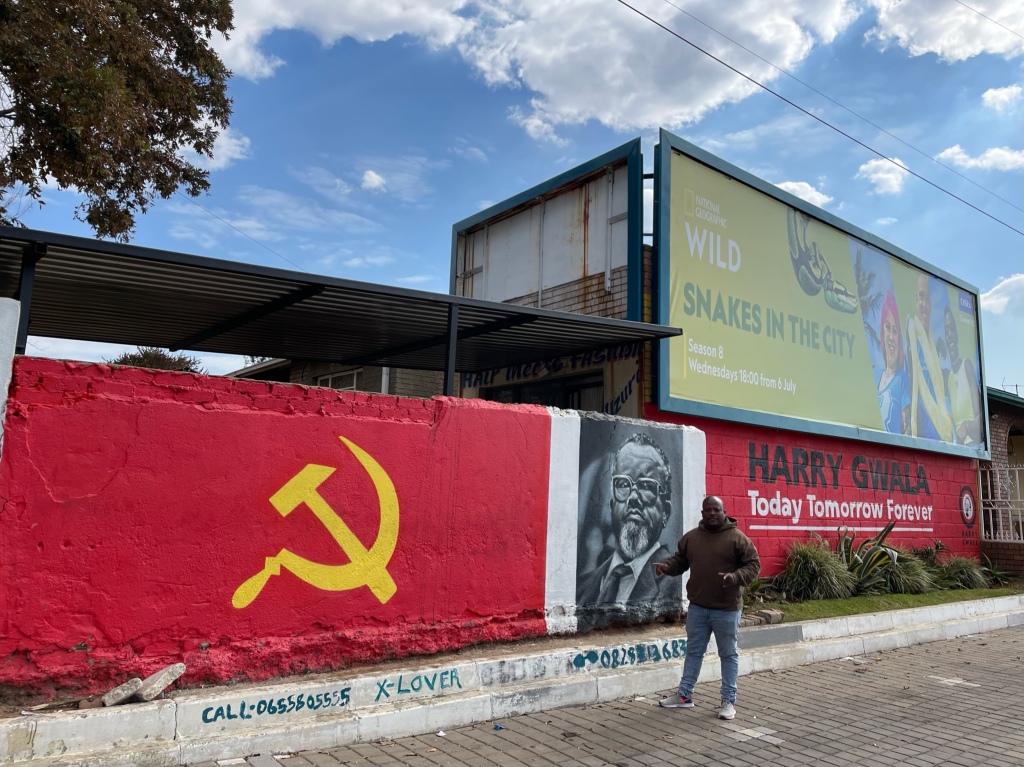
We started our first full day in Jo’burg at Nelson Mandela’s house in Soweto, a township created in the 1930s by the white South African government to push black citizens into a separated community away from whites and Indians. It was also the site of the Soweto Rebellion, where residents started protesting against the enforcement of the Afrikaans language (A Dutch, not native language) in schools. By the way, I am by no means doing the history of Soweto, apartheid, and the constant turmoil in South African justice with my watered-down summary, so if you have time, I’d highly recommend doing some research on your own.
Initially, Soweto lacked all normal municipalities like roads, water, sewerage, electricity, and proper housing. Still, there have been improvements in certain areas, and you can even see a bulk of nicer houses within the township, though it’s definitely not the majority. I have yet to touch on townships, but like the load shedding/rolling blackouts, it was an authentic look inside what goes on in South Africa. Townships are on the outskirts of cities. So while you can find townships like Soweto with “normal” houses (or what we consider normal in Western culture), electricity, running water, etc., most of the locations we passed by consisted of hundreds or thousands of shacks or shipping containers smushed together on undesirable land. Sometimes the land was flooded or covered in raw sewage and trash while children played soccer or goats grazed nearby. Sometimes the land was illegally near the airport, causing the residents to deal with dangerous plane debris falling from above. Even more menacing, they could only access their homes by walking alongside busy highways.
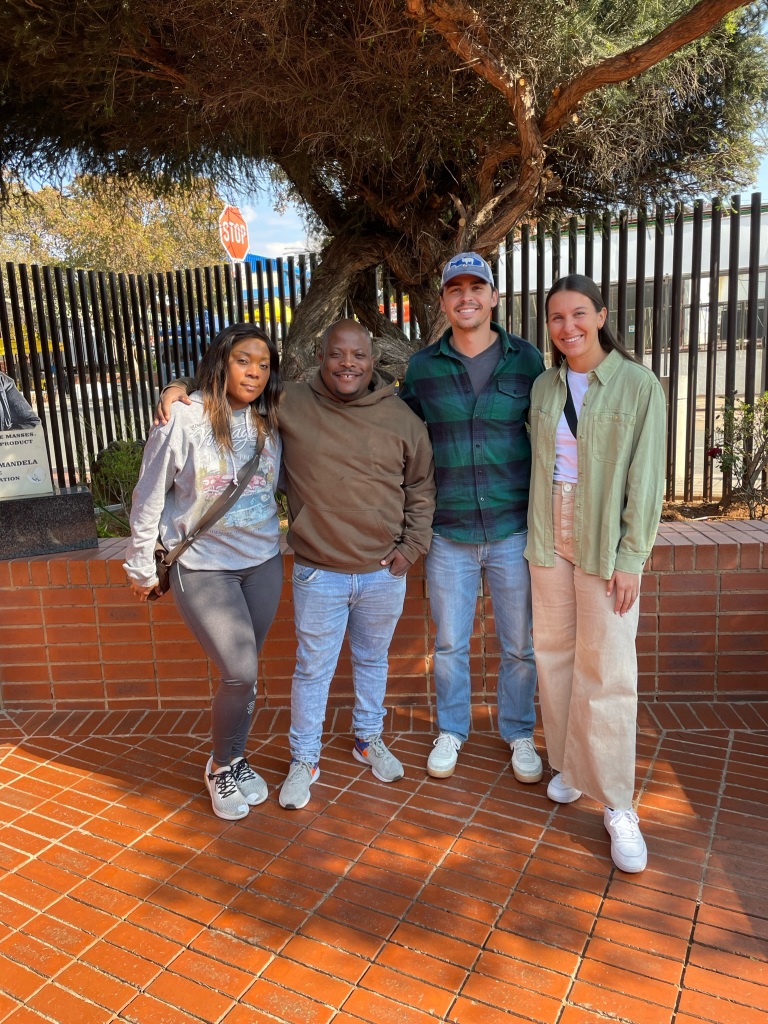
So back to Mandela House. We took a tour with our guides in his home from 1946 to 1962. It was very informative and covered the events of Mandela’s life and his second wife/political activist, Winnie Mandela. There were even still bullet holes in the walls from attacks on him. Up the street, we also visited the Hector Pieterson Memorial, where we continued to learn about the Soweto uprising and apartheid. It was a pretty heavy experience, especially seeing all of the violence and death that took place, not only during the rebellion by during all of the apartheid, which, remember, only ended in the 90s. Since the Apartheid Museum was closed, both locations were super helpful for us to understand better what life was like during apartheid and the impact it had on residents in Soweto.


After the memorial/museum, we were fortunate to try some authentic African cuisine at Sakhumzi, including stew, rice, pap, samp and beans, dombolo, and many other things I can’t remember/find on their website. The food was delicious but also different from most things I’ve had in my life. While we ate, various street performers were nearby dancing in traditional garb. There was also an acapella group with fabulous voices coming up to tables at the restaurant and serenading patrons.

Our next stop was very random, but we were kind of going with the flow on whatever our guides wanted to do at this point. We went to two water towers covered in graffiti with a bar at the base and bungee jumping at the top. There was no historical reason for this stop, but our guides thought they were cool, so we paid some random men to watch our car and walk around.
I mentioned that carjacking is prevalent in South Africa, especially in Johannesburg, so I want to touch on something interesting. So most places have formal parking lots – like malls, stores, etc. But you have to pay for parking in most parking lots, especially not in a major city. And by pay, I mean you give some random man or group of men, often smoking cigarettes, sometimes in neon vests, hanging out in said parking lot to make sure your car doesn’t get stolen. While these people aren’t official parking attendants, the fair is typically a couple of bucks to get an extra set of eyes on your vehicle. Also, if you don’t pay them…. I’m not sure what exactly happens. As I said, it’s not mandatory by the businesses, government, etc., but I’ve seen these self-elected parking attendants chase after cars or harass people until they’re paid. So we always paid.
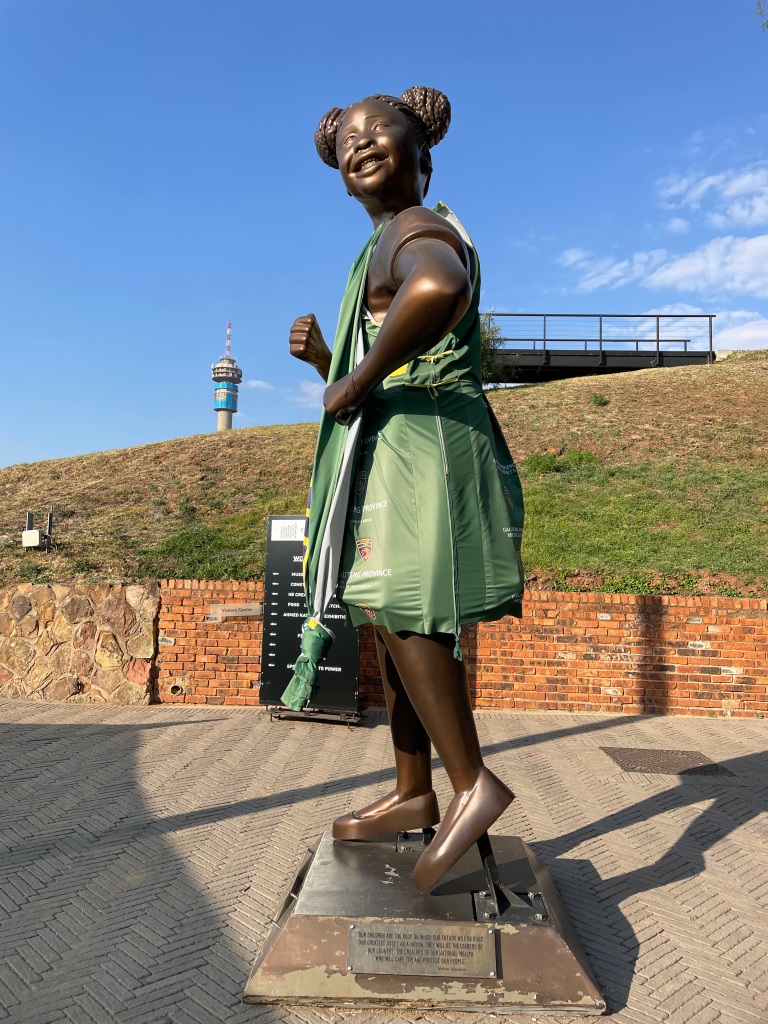
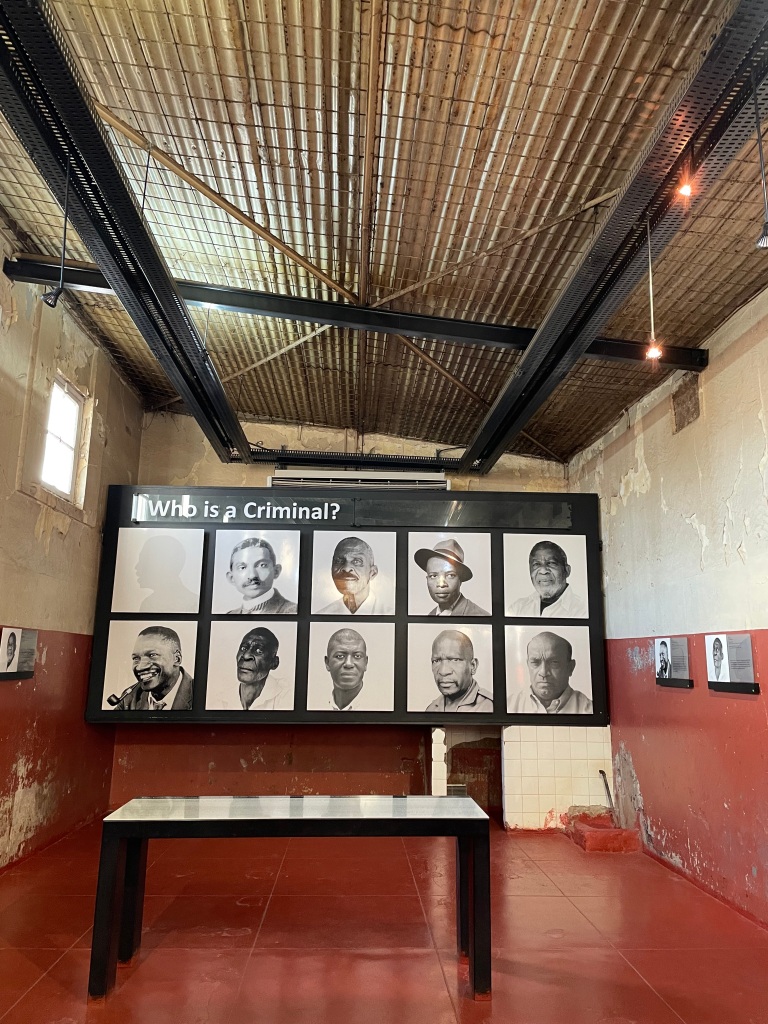
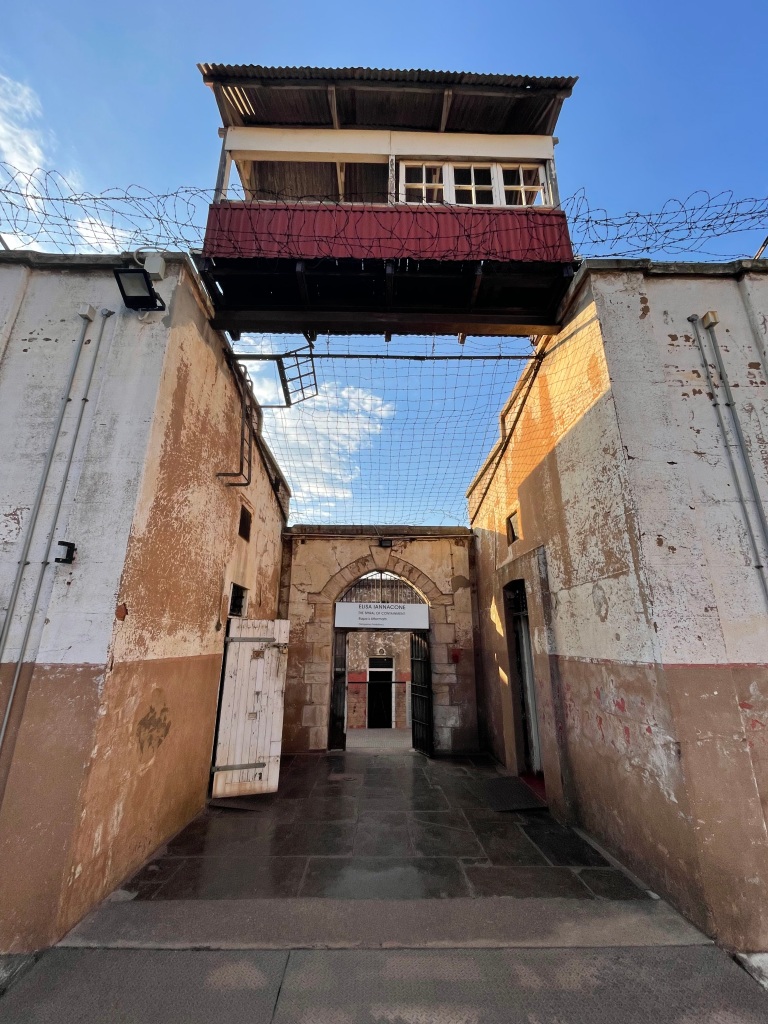

Our final and most interesting stop was Constitution Hill, which was in the heart of the city and located next to one of the most dangerous neighborhoods, Hillbrow, that our local guides wouldn’t even drive through. I’ll give you the website’s short description of Constitution Hill as it best sums it up. “Constitution Hill is a living museum that tells the story of South Africa’s journey to democracy. The site is a former prison and military fort that bears testament to South Africa’s turbulent past and, today, is home to the country’s Constitutional Court, which endorses the rights of all citizens.”
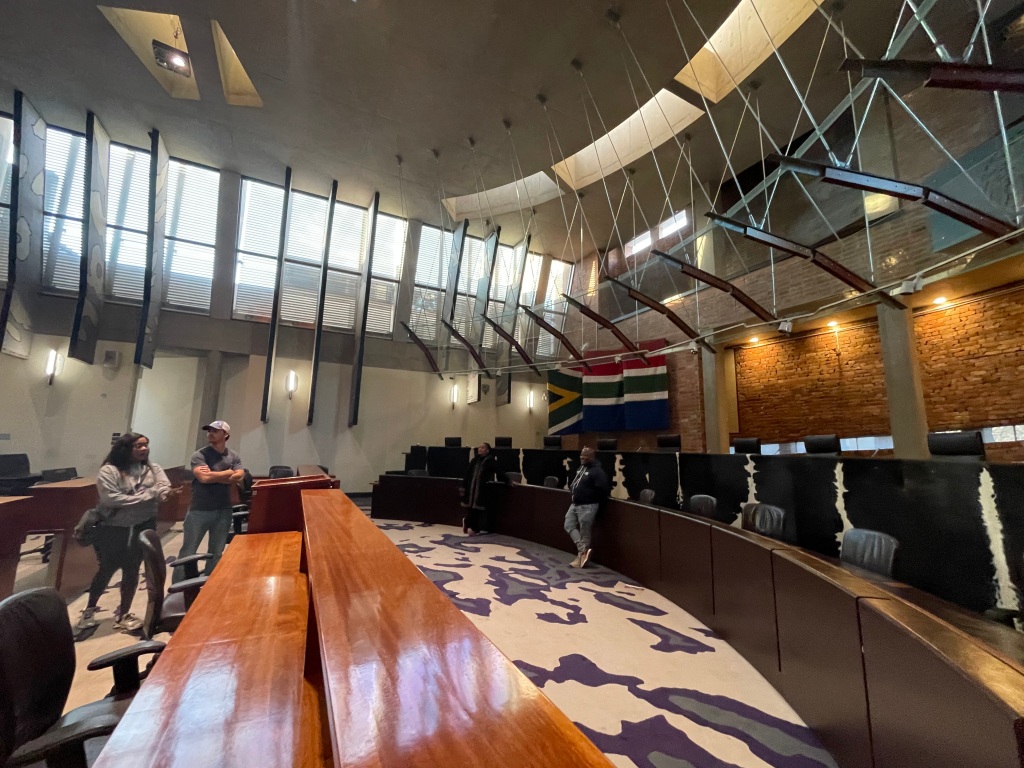
We started by touring the women’s prison portion of the complex, and then ventured into the men’s, learning about notable former prisoners such as Mahatma Gandhi and Nelson Mandela. We also learned about the brutal treatment and harsh conditions prisoners faced by guards and other peers, which I won’t get into but again, feel free to research! Next, we went into South Africa’s Constitutional Court, the highest courtroom in the country. While historical artifacts and art surround it, there is also an actual courtroom that is still in use for judging constitutional cases. For us Americans, it’s the equivalent of going to The Supreme Court in Washington, D.C. Our tour guide at the hill was fantastic, and the museum is a must-visit if you’re in Johannesburg!

Finally, we ended the day and our time in Jo’burg, eating pasta in bed and passing out. But then we woke up in the middle of the night to panic about the six-hour drive to Kruger National Park for a variety of reasons – driving on the opposite side of the road, in the opposite side of the car from what we’re used to, but primarily our safety. But, I’m here writing this blog, so I think you can guess that we made it through alright.
Okay, one more blog left on the honeymoon tour! Stay tuned!
 Chasing Spain